Highlander: Immortal
I didn’t see Highlander during its cinematic release way back in 1986. In fact, I don’t recall its cinematic release, which is unusual, because I was constantly going to the cinema to watch movies. It wasn’t until Highlander’s VHS release that I saw it (I only borrowed it because I borrowed pretty much everything), but it immediately became a favourite.
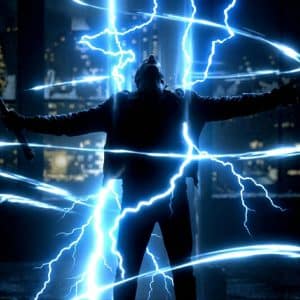
Swords? Tragic heroes? Two beautiful love interests in Beatie Edney’s Heather (and even the romantic in teen-me was committed to the tragedy of that romance) and Roxanne Hart’s Brenda? A larger-than-life villain in Kurgan (awesomely played by the equally awesome Clancy Brown)? Sean Connery as the mentor Ramirez? Actually, it didn’t matter what Connery was doing, but Connery was in it! He was enjoying a renaissance in his career through the 1980s. And then there was Queen’s awesome soundtrack – their ballad “Who wants to live forever?” is criminally underrated, and probably never got the dues it deserves because it’s been consigned to this little movie.
If you haven’t seen it, Highlander follows Christopher Lambert’s Connor MacLeod, born in 1518 in Glenfinnan, Scotland. He discovers he’s one of many immortals who must battle and kill each other (only accomplished through decapitation), with the last survivor to win the Prize, an undistinguished ability that sounds pretty underwhelming when it’s revealed to be something like reading everybody’s mind.
The story jumps between the 1500s in Scotland (where Connor’s born and spends his adult years with Heather) and 1985 in New York (where he’s an antique dealer living under an alias), with a handful of flashbacks scattered through different historical times and locations as we revisit Connor trying to survive.
The movie’s just about perfect given what it sets out to do. Christopher Lambert has an enigmatic quality that fits Connor. The swordplay’s good enough to enjoy. And the premise creates a neat mythology that offers enough to invest in, but remains cryptic enough that you won’t pick it apart.
The problem is it’s a close-ended story: I don’t think it’ll be a shock to anybody who hasn’t seen it that Connor triumphs over Kurgan. A catchphrase throughout the story is, “There can be only one”, and Connor becomes that one.
There. The end. That’s it.
While the movie wasn’t a cinematic success, it became a video success, and that eventually necessitated a sequel.
I’ll give Highlander II: The Quickening credit for trying to continue the story, rather than – as so many sequels do – rehash it.
And that’s where the credit ends.
The Quickening picks up in the near future where the ozone’s depleted, and Connor’s used his ability to help the world’s best scientists to unite and create a shield around the Earth that protects us from deadly radiation. But the shield pitches us in perpetual twilight, and as the decades tumble by, people find that bleak.
Then we learn the immortals are from the planet Zeist, and had launched a rebellion against a tyrannical government but failed. Their punishment? Exile on Earth, where they’d become immortal, and would have to battle to the death until only one remained. That one would be able to return to Zeist. Given Zeist is depicted as a seemingly unending desert, I’m unsure why return to some barren shithole triumphs bumming around Earth being immortal, and effectively invulnerable.
Oh yeah, Sean Connery’s Ramirez is back, even though he died in the first movie. How does he come back? you may ask. Well, Connor shouts, “I need you!” and Ramirez comes back. That resurrection should tell you something about the thought that’s gone into this.
The whole thing plays as if some studio exec was ordered to find a screenwriter to continue the story, and that exec quickly briefed their receptionist and ordered them to find a screenwriter, and the receptionist lazily relayed the brief and delegated that responsibility to the mail-boy, who jumbled up what he remembered of the story and delegated it to his idiot cousin Larry, who said something-something about immortals as he delegated it to his eight-year-old brother, who talked about aliens and ozone and delegated it to his seven-year-old friend to write up the story and turn it in.
Highlander III: The Sorcerer ignores Highlander II – I could be wrong, but I think that’s the first time a franchise actively ignores a sequel and picks up from an earlier point in the franchise. Nowadays, that’s much more regular. Back then? Franchises usually lived and died by each instalment.
The Sorcerer introduces a loophole that allows the appearance of another immortal, Kane. Kane was buried in a cave-in, and thus died. Immortals usually rejuvenate, but his circumstances didn’t allow him to. Centuries later, his body is excavated, and his immortality is finally able to kick in and resurrect him, so he goes after Connor. But Kane’s the last immortal. I promise!
Until the spin-off TV series, featuring Duncan MacLeod. Connor guest stars in the pilot to offer some validity to his kinsman. They just outright ignore Highlander’s conclusion. In fact, in one episode they offhandedly reference that Connor killed Kurgan, which did humanity a favour, and ignore that was meant to be the battle of the final two immortals.
The series, although formulaic at times, does a neat job of exploring the immortal mythology and building on it, but given there are always new immortals being created – they are seemingly normal people until their immortality is triggered by a violent death – I’m unsure how this is ever meant to end.
Props to Adrian Paul as Duncan – Paul has the enigmatic mystery down right, and he knows a range of martial arts, so his combat (even for a TV show back in this time) is on another level to Lambert’s. Arguably, his casting is what makes the show work.
There was also a spin-off series, Highlander: The Raven, starring Elizabeth Gracen as the immortal Amanda. I never saw it, so can’t comment, but the popular consensus is that it was awful. What’s looked on more favourably is Highlander: The Animated Series, which featured Ramirez mentoring a young immortal, Quentin, in a post-apocalyptic medieval 27th century.
Back in the cinematic universe, Highlander IV: Endgame marries Connor’s and Duncan’s mythology and has some neat concepts, but is clunky as hell. Highlander V: The Source, to its credit (again), tries to continue the story by exploring the origin of the immortality, but it makes The Quickening look like Shakespeare, and a school play featuring six-year-olds look like it was made on a budget of millions.
There’s always been talk about a reboot throughout the years, and that’s now underway with Henry Cavill as Connor, Dave Bautista as Kurgan, and Russell Crowe in Connery’s role as the mentor Ramirez.
I’m sure this will be gorgeous, everybody will be great in their roles, and the swordplay will be vastly superior to the original. In the 1980s, you approximated enough of something to create the affectation that it looked real enough to belief. Nowadays, they send actors to get lessons so it is real.
The casting’s good, although when this was all just being talked about, I thought Jason Momoa would be the perfect Kurgan. However, do you want Henry Cavill’s Superman and Jason Momoa’s Aquaman battling it out on screen while Superman’s dad (Russell Crowe) plays the mentor? It might’ve been just a bit too much of a DC reunion.
Whether the movie will be any good, though, is anybody’s guess. The original captured lightning in a VHS bottle. The reboot – as reboots often do – is trying to artificially recreate that.
The bigger problem is where do you take the story? Hollywood, as Hollywood is wont to do, will try to franchise it. But the story’s close-ended. Do we just have Connor endlessly fighting other immortals? At what point do we stop caring? It is a story that’s meant to have a definitive finish.
When I was a geeky young writer and coming up with (fan) sequels for all my favourite properties, I had written a sequel (in my mind) where immortals belonged to different cycles. Each cycle produced a different Prize. When only the champions of each cycle remained, they fought each other.
If you haven’t seen Highlander, that won’t make much sense, and neither will this: Ramirez belonged to a previous cycle, and champions couldn’t die until all the cycles were complete. That was my way of bringing him back. It also layered Ramirez’s relationship to Connor: Ramirez wasn’t just preparing Connor against Kurgan, but possibly protecting himself from having to face Kurgan in a battle of champions.
It still ultimately has to end at some point, though. But that was my means of getting more life out of the story in a way that might be meaningful, rather than producing some Zeistian-like logic, or just outright ignoring the original’s conclusion.
I’ll see the reboot and hope it succeeds, although I’m not hopeful given Hollywood’s track record when it comes to franchise resurrections (Star Wars, cinematic Star Trek, television Star Trek, Superman, DC’s other superheroes, then another Superman, Spider-Man … well, you get the idea).
Those original properties are usually the vision and passion of one person, whereas reboots try to trade off the original’s marquee. Look at JJ Abrams’ Star Trek into Darkness, which featured Benedict Cumberbatch’s Khan as the antagonist – a character who has no significance or relevance in JJ’s timeline, but is trading off what’s (still to this day!) considered the best Star Trek movie: Nicholas Meyer’s The Wrath of Khan.
Reboots can look great. We live in an age where things should, at a minimum, look great. JJ Abrams has proven that repeatedly. I found that the most offensive with Disney’s Star Wars Sequel Trilogy. They looked beautiful. The effects were much better than anything George Lucas had done, but they offered none of Lucas’s vision or aesthetic voice. People complain AI imagery and videos look soulless. That’s what the Sequel Trilogy looked like – visually stunning but sterile. They were made by people who understood how Star Wars looks without understanding how Star Wars works. Then there’s the storytelling. They’re often shallow, or that other sh word: shit.
Anyway, you know what I’d love to see? Not another Highlander movie or TV series, but an online game where you create your immortal, and then battle others. If you beat them, you gain their power. They respawn at an earlier stage (since you don’t want to discourage players entirely by forcing them to start over).
So you go around having little adventures (like all these other games with online universes) but you’re always on the hunt for other immortals. You can make alliances, dedicate yourself to good or bad, and live by the story’s mythology: e.g. you have to lose your head to die, you regenerate from other injuries (given time and opportunity), and you can’t fight on holy ground. You might even have to forge your own sword.
The only thing I’d be concerned about would be making a game that has good combat mechanics. Too often (if not all the time) in games that have any swordplay, it really is just hack and slash. There’s not enough skill to it.
Part of the problem is that games want to keep everything three-dimensional. That means you could be facing somebody who’s not on your axis, and attacking their toes, although that’s not the intention. Or you spend time trying to orient your player to face the enemy, but the gameplay’s mechanics have you facing the wrong way.
If you go back to something like Prince of Persia in 1989, that had a simple two-dimensional axis. You could hit high, low, or in-between, and had a block. But as simple as that was, you could have epic battles because you were locked into the same physics. At no point were you trying to do something and suffering because the gameplay’s mechanics were misinterpreting you.
Anyway, that’s just what I’d like to see.
P.S. Make it virtual reality!